What is this, you ask? A Mini-Conference for Crafting Your Stories and Building Your Career brought to you by the
Rose City Romance Writers (a fun and informative group!)
When? March 8, 2014 from 9:00 AM – 5:00PM
Where? PCC Sylvania Campus – Rooms: TCB 215-218
Workshops!
Maintain Pacing while Interweaving Historical, Factual, and Character Details in Fresh, Succinct Ways
Presented by Kristina McMorris
As readers, we've all been stalled at one time by a book's dreaded "info dump," ranging from characterization and backstory to factual research of various kinds. Through specific examples, this workshop will provide both practical and creative tips on how to craft, sift, and place such details without slowing a story's momentum. Also, learn what to do when faced by factual discoveries or common misconceptions that contradict even major elements of your work-in-progress. (After all, you don't always have to kill your darlings!)
Kristina McMorris is a bestselling author published by Kensington Books, Avon/HarperCollins UK, and Berkley/Penguin. Her works of fiction have garnered more than twenty national literary awards, as well as a nomination for the prestigious RITA® Award. Inspired by true personal and historical accounts, her novels include Letters from Home, Bridge of Scarlet Leaves, and most recently The Pieces We Keep. Prior to her writing career, she worked as a host on weekly TV shows since age nine, including an Emmy® Award-winning program, and owned a wedding- and event-planning company, thereby subjecting her to enough YMCA and Chicken Dances to last a lifetime. Kristina has been named one of Portland's "40 Under 40" by The Business Journal and currently lives in Oregon with her husband and two young sons.
Judge a Book by Its Cover
Presented by Sarina Dorie and Tanith Yates
A proper book cover is as important as your genre. If people can’t identify who you are and what your book is about within a matter of seconds, then you lose the opportunity of a quick sell. In this workshop, learn tips and tricks to help you create a spectacular front cover, and enough knowledge to show you know what you’re talking about when working with a publisher. Use your newfound abilities of cover design to help you to create a consistent brand. You hold the power to start your Brand now, whether you’re a beginning writer or a professional. Your choices in using color, images and text can say a lot about you and how the audience will remember you.

As a child, Sarina Dorie dreamed of being an astronaut/archeologist/fashion designer/illustrator/writer. After years of dedication and hard work, most of Sarina’s dreams have come true; in addition to teaching art, she is a writer/artist/fashion designer/ belly dancer. She has taught English overseas South Korea and in the JET program in Japan, and worked as a copy editor. She has shown her art internationally and sold illustrations to magazines. Sarina’s published novel, Silent Moon, won second place in the Duel on the Delta Contest, second place in the Golden Rose, third place in the Winter Rose Contest and third in the Ignite the Flame Contest. Her unpublished novel, Wrath of the Tooth Fairy won first place in the Golden Claddagh and in the Golden Rose contests. She has sold short stories to over thirty magazines and anthologies including Daily Science Fiction, Cosmos, Penumbra, Sword and Laser, Perihelion, Bards and Sages, Neo-Opsis, Flagship, Allasso, New Myths, Untied Shoelaces of the Mind, and Crossed Genres to name a few.
Now, if only Jack Sparrow asks her to marry him, all her dreams will come true.
Tanith Yates is a marketing strategist and senior designer, working with corporate clients and entrepreneurs for over sixteen years. Her unique combination of brand building experience and expertise in graphic design allows her to integrate visual strategies that transform businesses into recognizable name brands. She captures ideas and concepts, bringing them to life, using strategic design principles and psychology to create powerful visual identities that are memorable, accessible, and profitable.
Currently, Tanith is working on a branding workbook for authors, sharing her trade secrets on how writers can develop their personal brand, achieve their goals, find their audience – and sell more books!
Personal Branding and Google Plus for Authors in 2014
Presented by John Ellis
2014 saw a paradigm shift in how the Google web functions for us, with us. Google has changed the focus from your site, to you and what you do online daily. Those changes serve authors in ways the Internet didn’t, couldn’t, just two years ago. Authorship gives you full credit for your words, your brand, your work...if you know how to write, share and engage on Google +.
Join me for a fast-paced primer on Google’s modern platform. You’ll learn how it works, why it’s important and how to make it your best book selling engine of 2014.
John Ellis is a mad scientist on the web. He translates geek into English helping small business owners leverage the power of the modern Web to build their brands, get more clients, and sell more books. After 20 years in technology, web development and, SEO he is excited to live in a time where the web is about people and their content, not the sites they put it on.
When not learning, writing, coaching and engaging about the web, John enjoys everything else around him.
Capture, Captivate, and Connect with your audiences as you speak from the stage
Presented by Kellie Grill
You need to speak about your books. Professional Speaker and Best Selling Author Kellie Grill will show you how to transform and inspire your audiences as they listen to you bring your books to life. Learn how to entertain and enlighten your audiences. Kellie's tips and tricks will take you to a new level of public speaking confidence. Don't be shy. Come have fun and learn speaking skills that will last for a lifetime of speaking on stage, with the media, and also help you at networking events.
Kellie Grill is a happiness expert, speaker, best selling author, songwriter, melanoma survivor, and co-owner of Whirlwind Publishing and Happy Success Ranch Retreats. Kellie’s books include her love story “Send Me a Sign”, “Happiness is Here-Simple Strategies for Staying happy”, and“Happiness is Mandatory” in the best selling book “Succeeding Against All Odds”
Kellie and her husband Dave live on a 40 acre horse farm in Wilsonville, and a 500 acre horse ranch in Eastern Oregon. They have 3 children and 3 grandchildren. Kellie is a member of the National Speaker Association and Past-President for NSA-Oregon. Contact Kellie at:
www.HappySuccessRanchRetreats.com www.WhirlwindPublishing.com
Color them Grey: Anti-Heroes
Presented by Jessica Morrell
Fiction often proves just how complicated and troubled many people are and anti-heroes are the perfect type to do so. Anti-heroes are a story’s main character who is flawed, who can disturb us with his or her weaknesses, and make us think about the frailties of humanity. This workshop will describe the attributes and uses of anti-heroes and clarify how they are often used in fiction to depict reality and comment on social or political issues. An anti-hero is sometimes a maverick or screw-up, an outsider, a “little man,” underdog, misfit, or fool. They often occupy a grey area between good and evil. Anti-heroes can share some of the same qualities as villains (cynicism, brutality, ruthlessness, dishonesty) and sometimes have the soul, values, morals and values of hero. Examples from classic and contemporary novels, television series and films will be used. We'll also cover the main trick in creating anti-heroes:
they always possess an underlying pathos.
Jessica Page Morrell understands both sides of the editorial desk–as an editor and author. She is the author of the upcoming
No Ordinary Days: The Seasons, Cycles, and Elements of the Writing Life;
Thanks, But This Isn’t For Us, A (sort of) Compassionate Guide to Why Your Writing is Being Rejected;
Bullies, Bastards & Bitches: How to Write the Bad Guys in Fiction; T
he Writer’s I Ching: Wisdom for the Creative Life;
Voices from the Street;
Between the Lines: master the subtle elements of fiction; and
Writing Out the Storm. Morrell works as a developmental editor where she has learned how to quickly size up a story’s merits, as a writing coach, and was formerly the Writing Expert at iVillage.com. She hosts a web site at
www.jessicamorrell.com and she’s been writing a monthly column about topics related to writing since 1998 which currently appears in The Willamette Writer, writes a newsletter,
The Writing Life, a web log
http://thewritinglifetoo.blogspot.com and has contributed articles to newspapers and
The Writer and
Writer’s Digest magazines. She also contributes to anthologies and is the founder and coordinator of three writing conferences. She lives in Portland, Oregon where she is surrounded by writers.
A Dark and Stormy Night: Avoiding Visual Cliché
in order to Stand Out in an Cluttered Market
Presented by Mark Montoya
The digital age has ushered in an era of visual image overload. Facebook, Pinterest, Instagram, television, etc. all are competing for your attention and the attention of the people you want reading your book. Strong, unexpected, and interesting photography provides a foothold to compete in a crowded market place. This workshop will discuss cultural ideas of photography, common pitfalls that make photographs unappealing, and an exploration of ideas to make your use of photographs have the impact you want.

Mark Montoya is hard pressed to pigeon-hole himself with a label, but when forced describes himself as a professional amateur. They say to "do what you love" and Mark took that advise literally having made a vocation of converting passions, hobbies, and interests into an interesting and varied career that has included designing home theaters, teaching martial arts, working as a bar bouncer, and running a college photographic darkroom. Mark's photography, like all the other pursuits in his life, are strongly influenced by the mélange' of other interests. Mark is currently pursuing a degree in Physics, an endeavor that began with his desire to make a single photograph.
World Building On The Run
Presented by C. Morgan Kennedy
Whether you write contemporary, historical, paranormal, or science fiction - a great story is always rooted in great world building. No offense to any of my writing friends, but I seem to write everywhere EXCEPT my home office! Using a tri-fold poster board or large dry erase board for my world building simply won't work. After I discuss some world building fundamentals, I'll give you some tips and tricks on how to design / create portable world building materials. Once your book is published, don't let your world building sit on a shelf! Reuse it to help with your marketing and promotions to sell more books! As an added bonus, I'll be giving away three world building journal starter kits.
C. Morgan Kennedy -
www.cmorgankennedy.com
C. Morgan Kennedy is the author of multicultural futuristic and steampunk novels. A self described 'Blerd' and Afrofuturist, Morgan puts her Bachelor of Science in Mechanical Engineering to good use imagining all manner of gadgets for her stories. As the co-founder of Author Marketing 101, she seeks to demystify marketing fundamentals for the writing and small business communities. The 'Author Marketing 101 Guide & Journal' is currently available in both print and e-book formats.
Taking Your Writing to the Next Level
Presented by Melissa McClone
Learn the writing techniques and tricks a multi-published author has gathered over the years. Some tools were taught to her by critique partners at different stages of her career. Others she learned writing and selling over thirty-one manuscripts. The sub-title for this workshop could be
How to Be A Better Writer and Critique Partner. There's no better way to learn than by doing which is why critiquing can help you be a stronger writer. Hint: you will be critiquing during the workshop! There will be examples and hands-on exercises to put the techniques into action so you can take your writing to the next level.
Melissa McClone - www.melissamcclone.com
Melissa McClone has written for four category lines at Harlequin since 1997. She's currently with the Special Editions line. She also writes for digital-first Tule Publishing Group. She's been nominated for Romance Writers of America's RITA award and won a RT Reviewer's Choice Award. When she isn't writing, she's driving her minivan to/from her children's many activities. She supports deployed service members by sending care packages and fosters cats through a local non-kill rescue shelter. She lives in Southwest Washington with her husband, three children, two spoiled Norwegian Elkhounds and cats who think they rule the house.
AND MORE!
Static display of a Regency Era costume displayed on a dress form, a writing slope with quill and ink, a few costuming books and a tea caddy with a tea set, and some period correct fabrics.
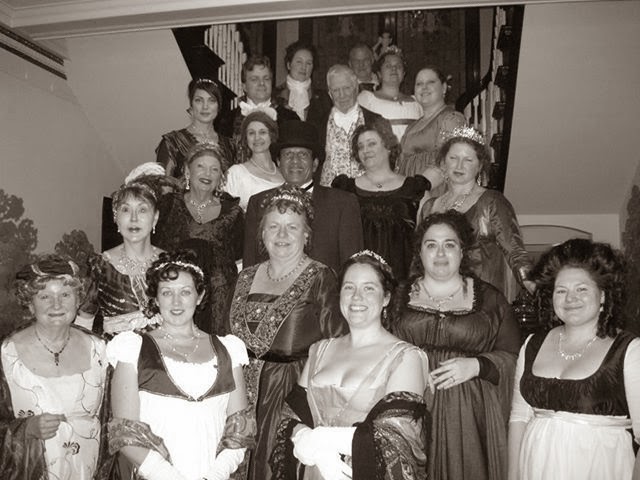
The Oregon Regency Society’s primary aim is to unite the groups and individuals dedicated to the appreciation of Jane Austen, Lord Byron, Beau Brummell, groups for English Country and Regency Dance, people that read and write Regency Romance, costumers specializing in Regency garments, and Historic reenactors and enthusiasts and so much more. We partake in events, workshops and educational opportunities to broaden our view of this all-too-short period in history. We celebrate the customs and costume of the time, and encourage all of our members to bring their own unique knowledge and skills to the table to share with others.
www.orregency.org; orregency@msn.com
Schedule
9:00-10:20A
C. Morgan Kennedy: World Building On The Run
Kellie Grill: Capture, Captivate and Connect with your Audiences as you speak from the stage
10:30-11:50A
Kristina McMorris: Maintain Pacing while Interweaving Historical, Factual and Character Details in Fresh, Succinct Ways
Mark Montoya: A Dark and Stormy Night: Avoiding Visual Cliché in order to Stand Out in a Cluttered Market
Noon- 1:20P Lunch Book Signing Raffle
1:30-2:50P
Jessica Page Morrell: Color them Grey: Anti-Heroes
Sarina Dorie/Tanith Yates: Judge a Book by Its Cover
3:00-4:20P
Melissa McClone: Taking Your Writing to the Next Level
John Ellis: Personal Branding and Google+ for Authors in 2014
Static Display – Promotions - Give-A-ways
10:00 A – 2:00 P Jan’s Paperback Book Sale Oregon Regency Society

 About the Presenter